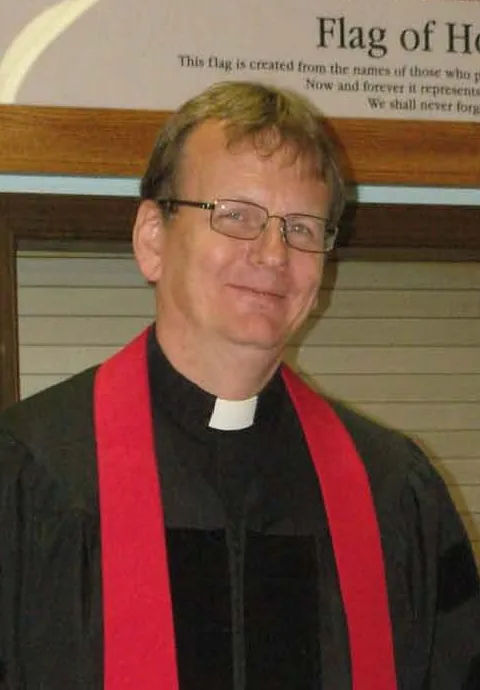
About the Bishop
The Most Reverend*Garland F. Byers, Jr., J.D., D.D.
Bishop to the Nations, under Apostolic Commission
Garland F. Byers, Jr. is a bishop in the historic apostolic succession, consecrated on April 20, 2013. He claims no diocesan or territorial authority over any church or denomination. His calling is the ministry of the written word: to set sound doctrine before the people of God.† The record of his baptism, ordination and consecration is presented here, with the documents and photographs which verify each.
Baptized into Christ
Bishop Byers was presented by his parents as an infant and baptized in the Methodist Church at Caroleen, North Carolina, on April 7, 1968. He received that baptism from the hand of the Lord, through the faith of his mother and father.
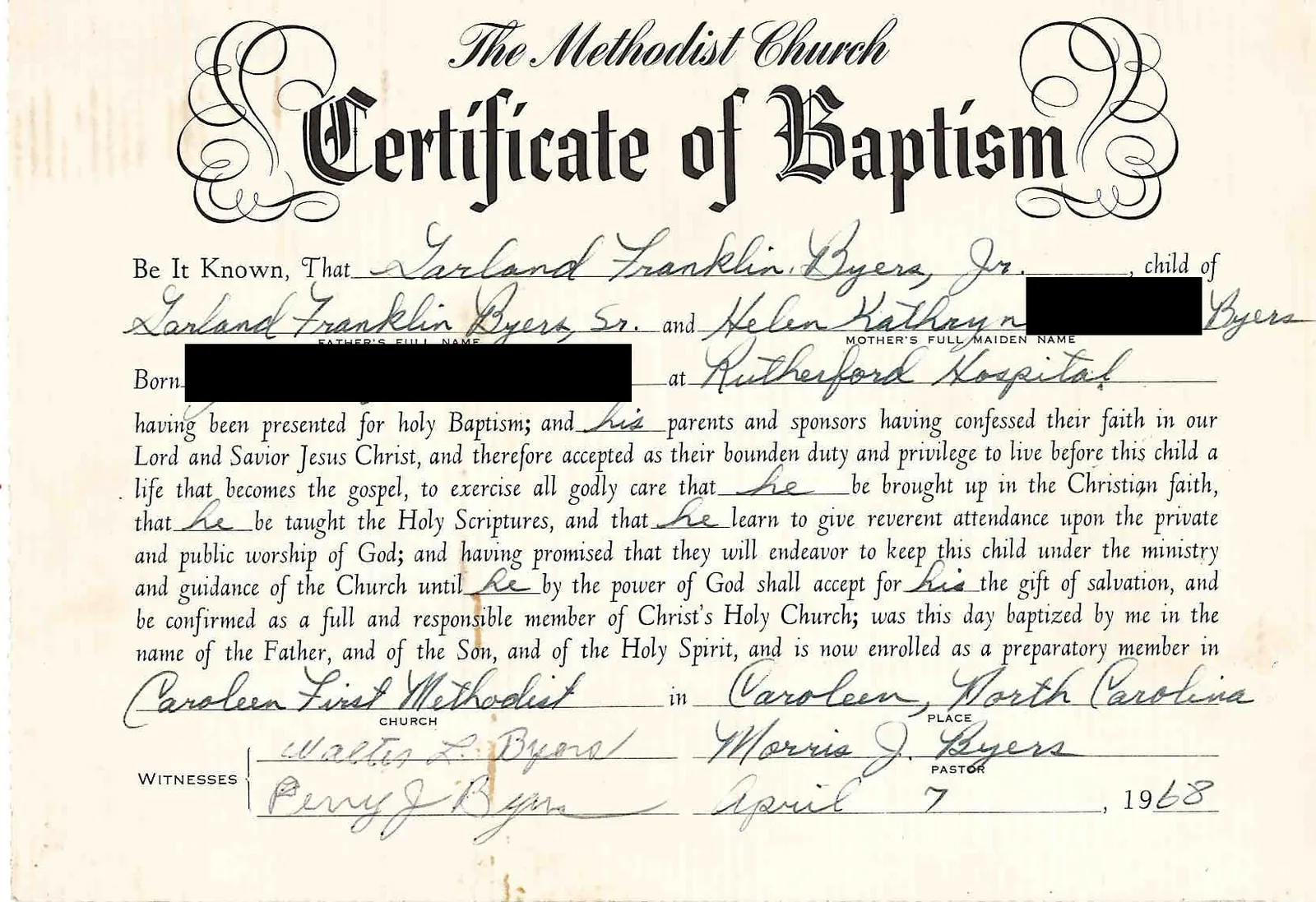
A Family Church
From his birth until he left for law school in the fall of 1996, his church home was the First United Methodist Church in Caroleen. It was a family church in the truest sense. His father and his uncles, all of them builders by trade, built it with their own hands, and most of the Byers family worshipped there.
Faith was the ordinary business of the family. His father served as the church’s lay leader and conducted services whenever the ordained minister was away. One of his uncles served as a United Methodist minister until his retirement, and that uncle’s son followed him into the same ministry and has since retired as well. Another cousin directed the church choir for decades, and other family members at various times served on the church’s administrative council, taught Sunday school, and held other positions in the church. Garland sang in the children’s choir as a child.
His church family was larger than his blood relations. Many members to whom he was not related were brothers and sisters in Christ to him, and they remained close throughout his life. He has returned to worship there from time to time ever since.
The Call to Service
Bishop Byers began his career in service to others as a police officer in North Carolina at the age of twenty. He served as a city police officer, as a county deputy sheriff, and finally as a state investigator in the district attorney’s office for what was then District 29, a five-county district. Over almost eight years in law enforcement, he made numerous felony arrests and received several regional citations for bravery and for commendable service to the community. In 1996, the North Carolina Department of Justice awarded him its Basic, Intermediate and Advanced Law Enforcement Certificates. The Advanced Certificate is held by approximately one percent of law enforcement officers in the state.
In 1996, while serving as the district attorney’s chief investigator, he applied to and was accepted into law school, and began his legal career that year. Over his legal career, he has served as a prosecutor under four elected district attorneys, at times covering seven counties. The rest of his practice has been as a trial lawyer, representing plaintiffs in civil claims and defending the accused in criminal cases, chiefly indigent clients.
It was during these years that he was called to the service of Christ.
The Call to Ministry
In about 2007, Bishop Byers felt the call of the Lord to His service. The Apostle Paul counseled:
“Let every man abide in the same calling wherein he was called.”1 Corinthians 7:20 (KJV)
He was a lawyer when the call came, and he remained a lawyer.
From the moment he felt that call, he sought a church body standing in valid apostolic succession in which to seek ordination. Many other opportunities were open to him, but because of the question of apostolic succession, the Lord led him to the Lutheran Orthodox Church. There he was shepherded by Presiding Archbishop Samuel Guido, Jr., then Archbishop over the whole denomination, to whom he was directly answerable and accountable. From Archbishop Guido he learned much about the faith, about how a minister of the Gospel should conduct himself, and about the solemn responsibility that office carries.
Formation
Bishop Byers holds no formal degree in theology. His formation has come through years of disciplined study, and through ministry under the guidance of Presiding Archbishop Samuel Guido, Jr. and Bishop Michael J. Kline of the Exorcist Order of St. Michael. The skills of the lawyer (researching a question to its sources, and weighing authority and evidence) carry over naturally into matters of faith. He has applied them through many hours of intensive study of Scripture, the Apostolic Fathers, the Desert Fathers, and the councils of the Church.
Convictions
Bishop Byers wholly confesses the Apostles’ Creed as the creed of his faith, and he also believes the Nicene Creed.
He believes there is one Gospel of Jesus Christ. Where Christian denominations and believers differ, the differences arise chiefly from human misunderstanding, or from dissension and discord deliberately stirred by the enemy, of whom the Lord said, “he is a liar, and the father of it” (John 8:44).
He believes that the people of God thirst for His knowledge, His blessing and His presence in their lives, and that those who truly believe seek His face: “When thou saidst, Seek ye my face; my heart said unto thee, Thy face, LORD, will I seek” (Psalm 27:8).
He believes that no one denomination holds all of the truth, but that the truth is scattered among the denominations of the Christian faithful. He believes further that Satan, also called the devil, does not want mankind to come to a knowledge of the truth, but seeks only to destroy: “The thief cometh not, but for to steal, and to kill, and to destroy” (John 10:10).
What is sorely lacking in this present evil day, he believes, is a voice crying in the wilderness (Isaiah 40:3; Matthew 3:3). That means a source of truth beholden to no denomination and no politics, with no agenda save preaching and delivering the true Word of God, unfiltered and unhindered by the workings and politics of institutional religion in general. Bishop Byers will write the truth as he understands it, without regard to denominational preference, political correctness, or the financial impact upon the coffers of the church. As is any bishop validly called and consecrated, he is vested with the authority of his sacred office to decide matters of faith, and he will do so without passion or prejudice.
He seeks the unity of the people of God, yet he remembers the words of the Lord: “Think not that I am come to send peace on earth: I came not to send peace, but a sword” (Matthew 10:34). To follow His voice will, by its nature, separate what must be separated. This work will be carried out through a series of writings for the Christian faithful.
Ordination
On August 17, 2008, by the laying on of hands at St. Paul’s Lutheran Orthodox Chapel in Palmerton, Pennsylvania, he was ordained a Minister of the Gospel.
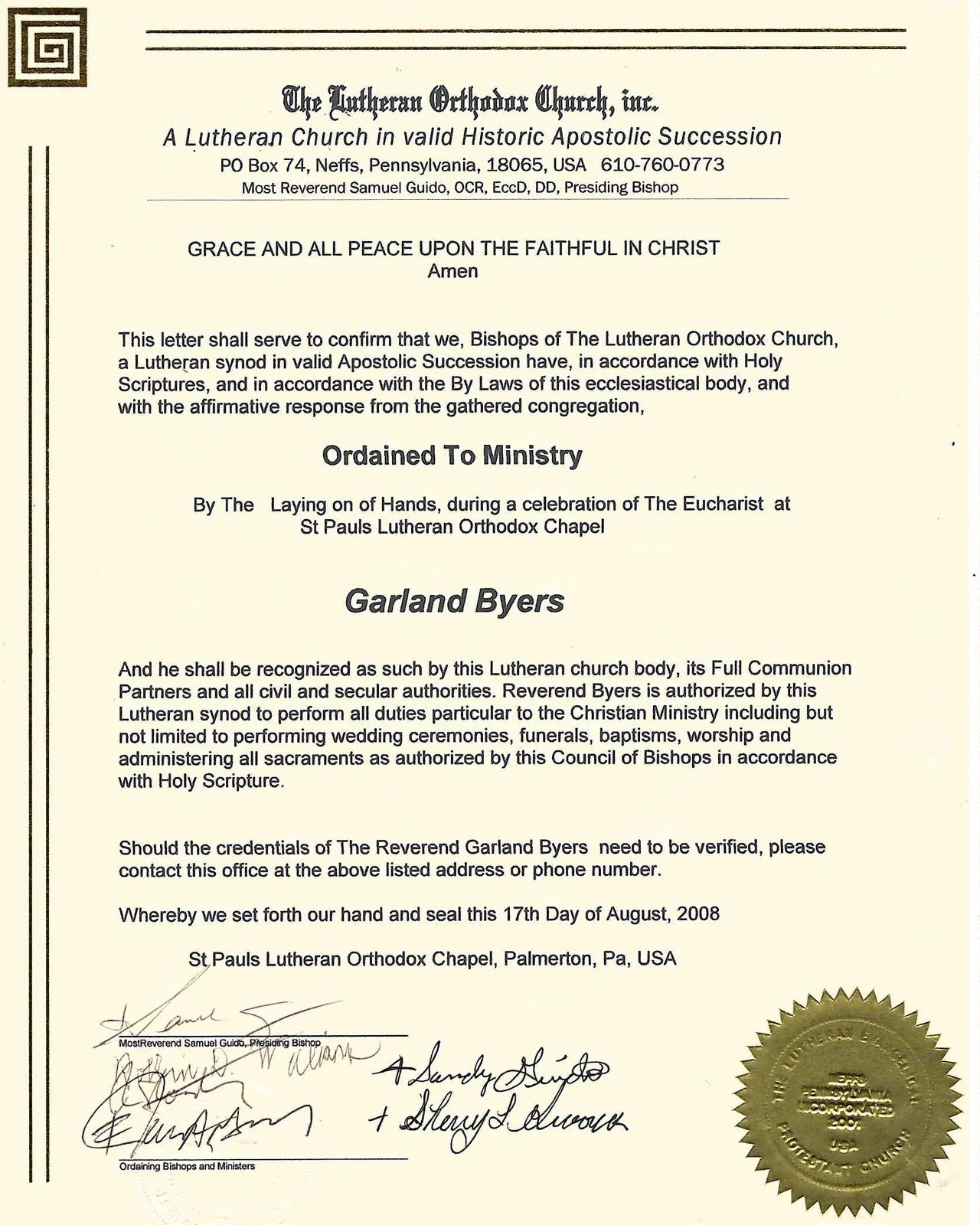
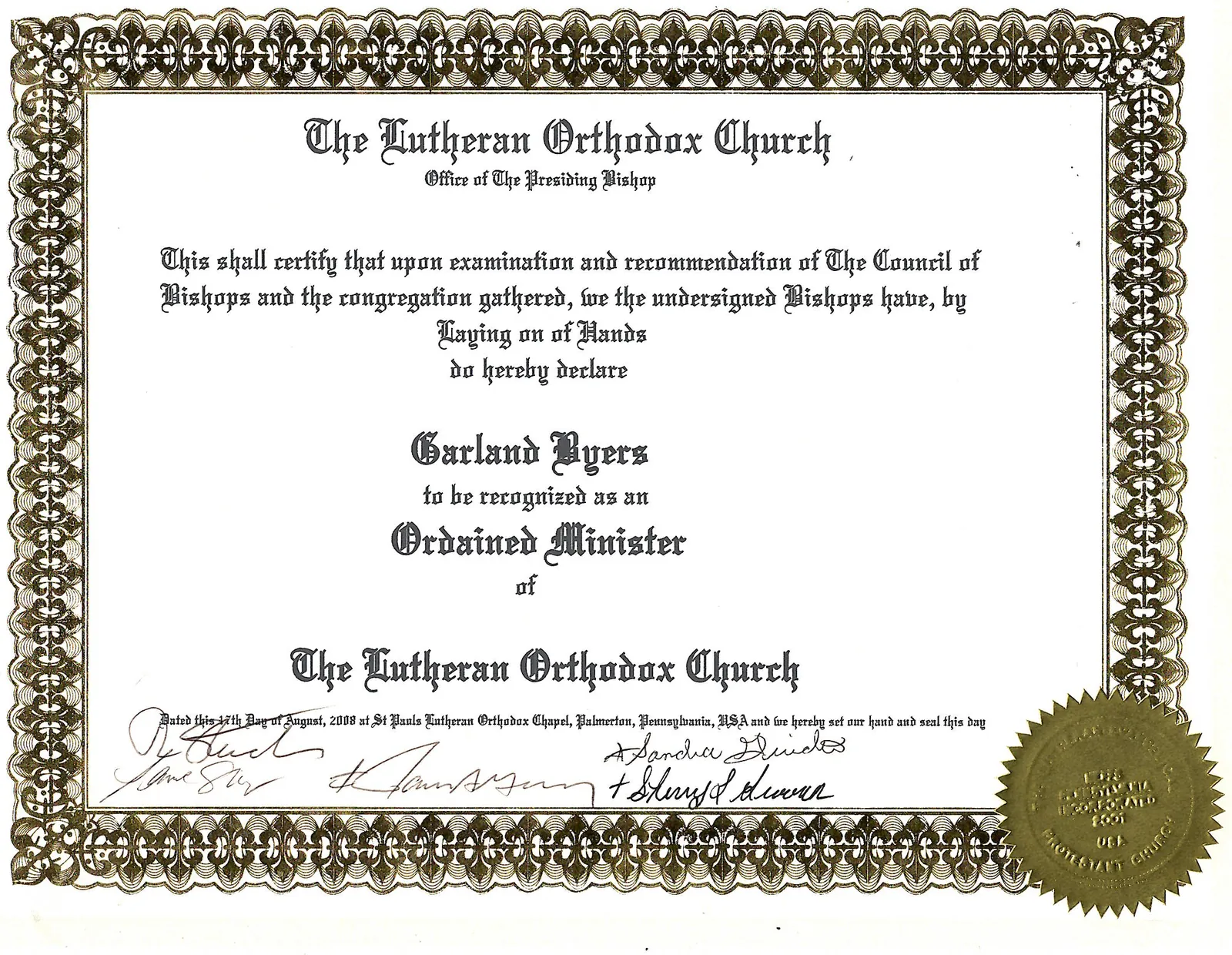
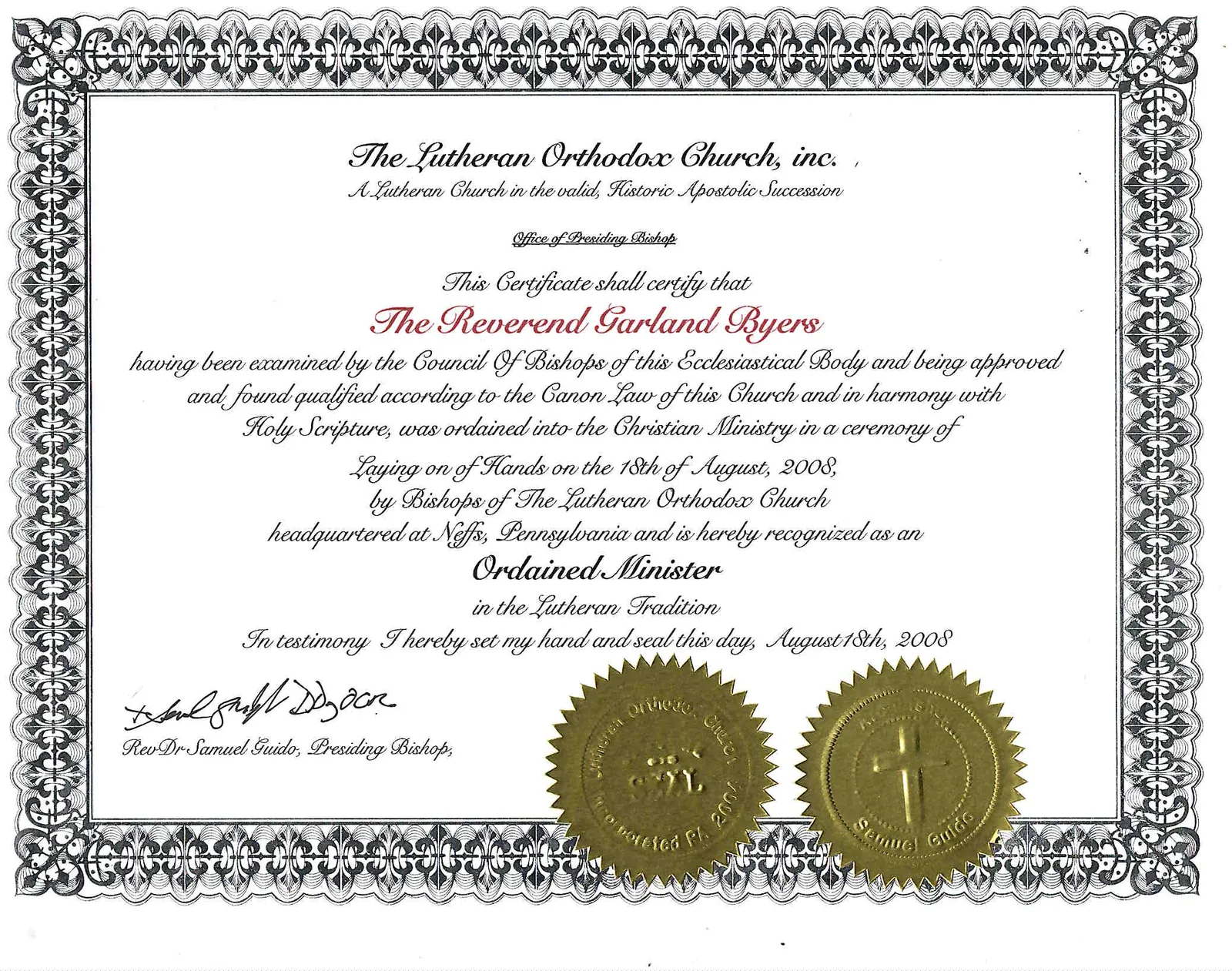
From his ordination until his consecration, he served as a Minister of the Gospel in the Diocese of Western North Carolina and as the church’s Director of Legal Affairs.
A Letter of Affirmation
In the years between his ordination and his consecration, Archbishop Guido introduced him to Bishop Michael J. Kline. The two became good friends, and Bishop Byers became a member of the Exorcist Order of St. Michael, over which Bishop Kline then presided. He assisted Bishop Kline in a number of episcopal matters.
Bishop Kline was not a member of the Lutheran Orthodox Church, and the decision to consecrate Bishop Byers rested with that church alone. No letter from him was required. But because of their work together, and because of his firm belief that Bishop Byers should be consecrated, Bishop Kline joined in the episcopal judgment that he was worthy and that the call upon his life to be a bishop in apostolic succession was true. On April 18, 2013, he issued this letter of consent and affirmation.
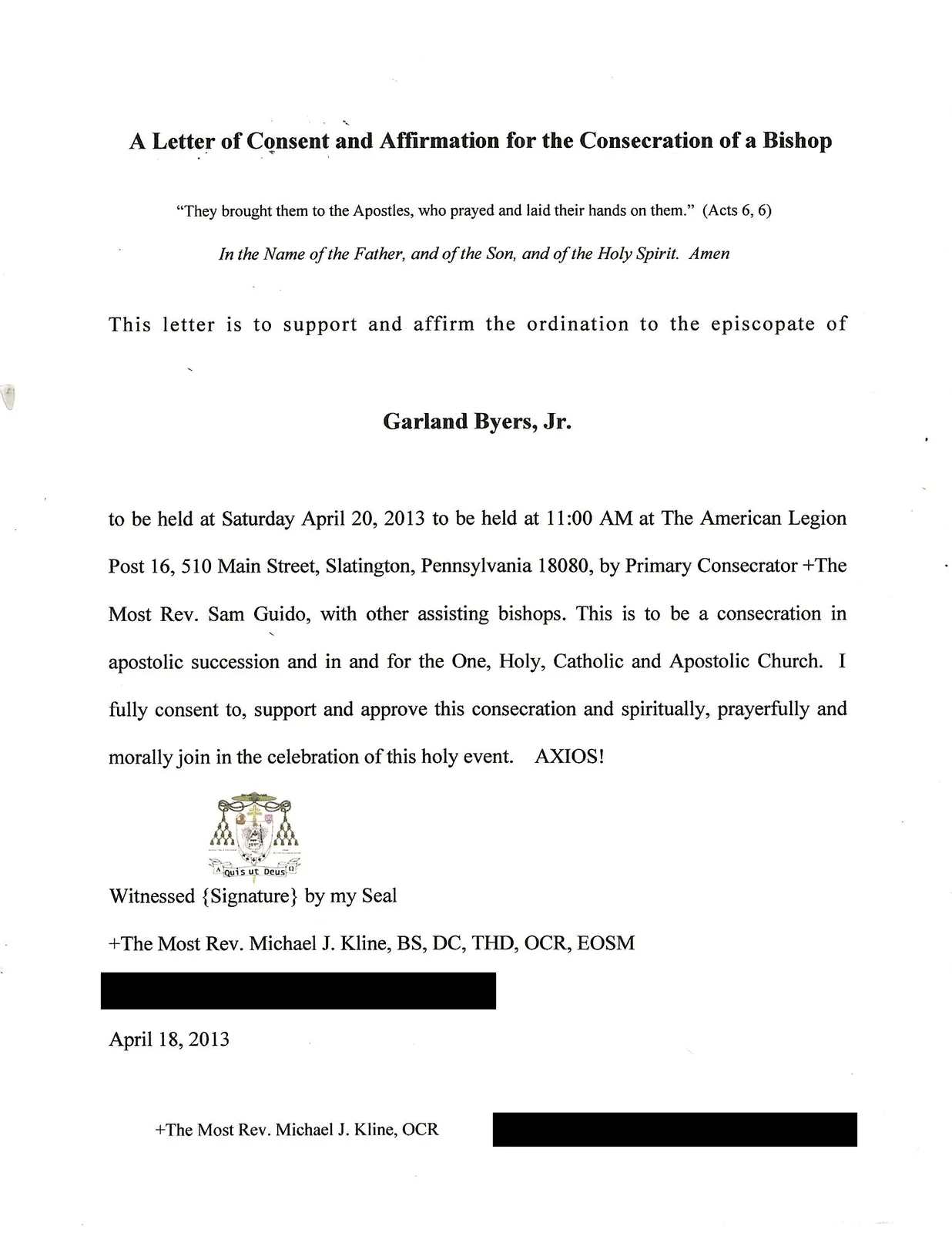
Consecration to the Holy Order of Bishop
On April 20, 2013, at St. Paul’s Lutheran Orthodox Chapel, meeting that day at American Legion Post 16, Slatington, Pennsylvania, Garland F. Byers, Jr. was consecrated to the Holy Order of Bishop by the laying on of hands during the celebration of the Holy Eucharist, and became Bishop of the Diocese of Western North Carolina.
- Principal consecrator
- The Most Reverend Samuel Guido, Jr.
- Co-consecrators
- Bishop Bradley A. Varvil
Bishop Michael Byus
Bishop James Thompson
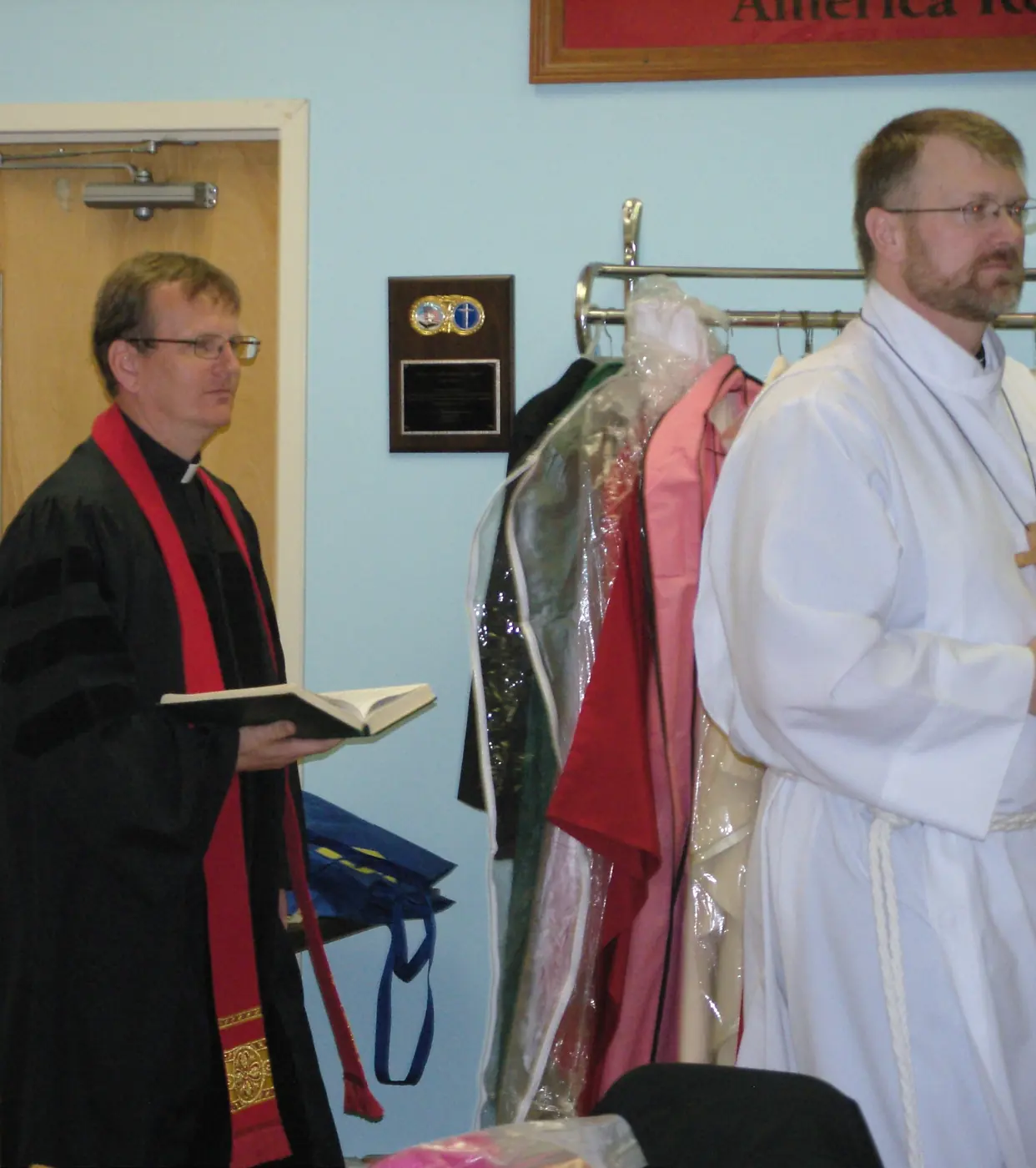
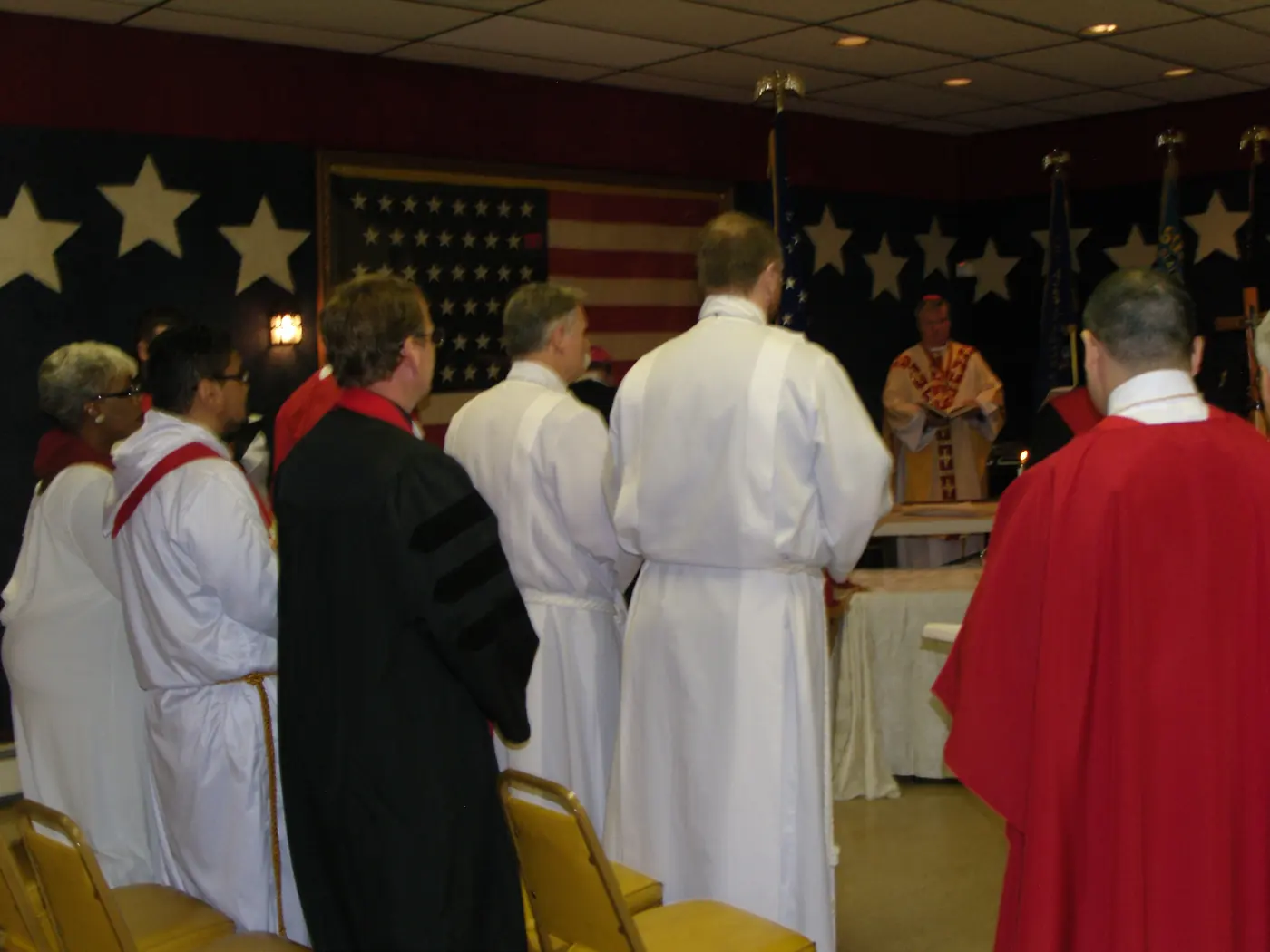
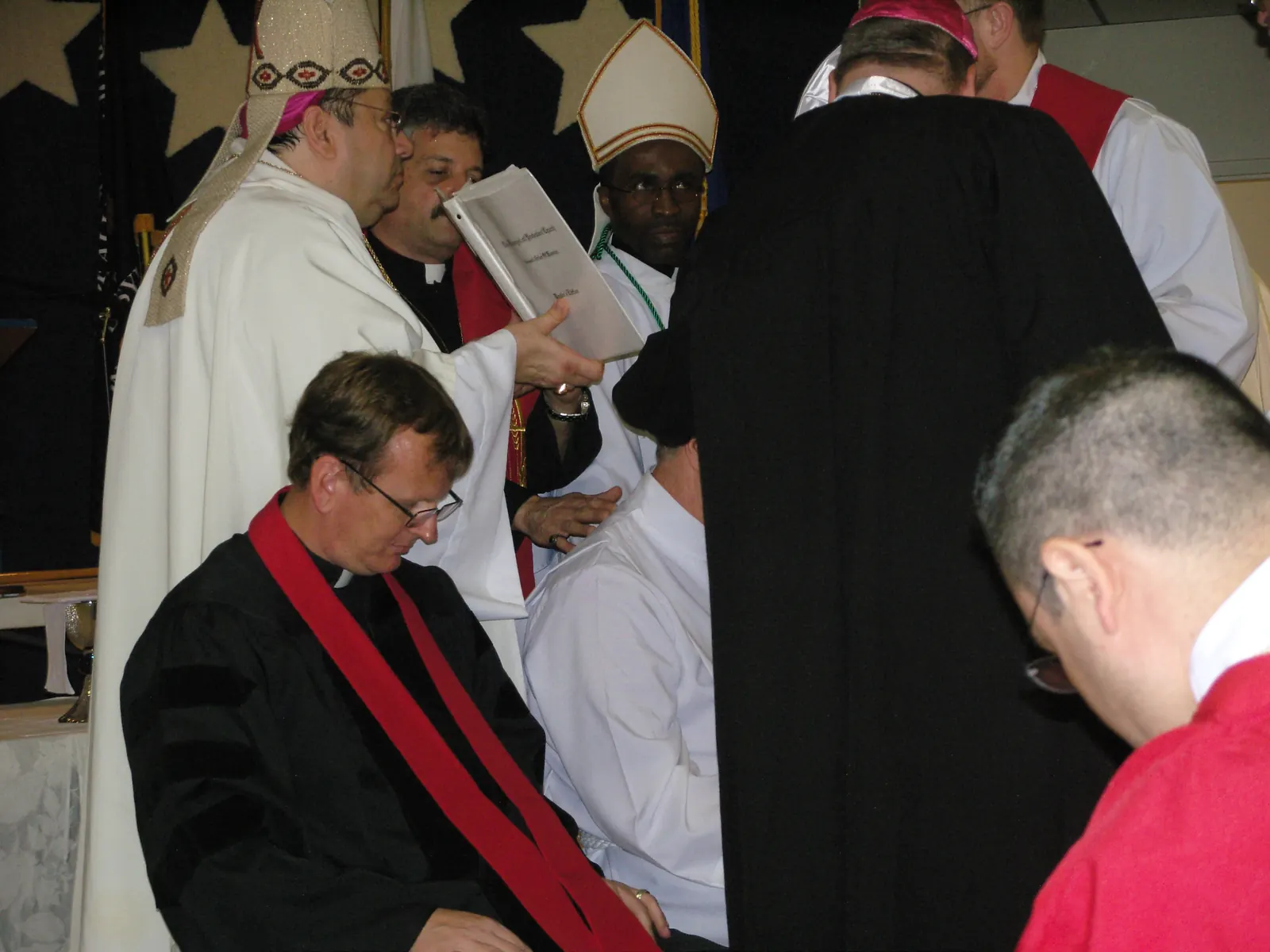
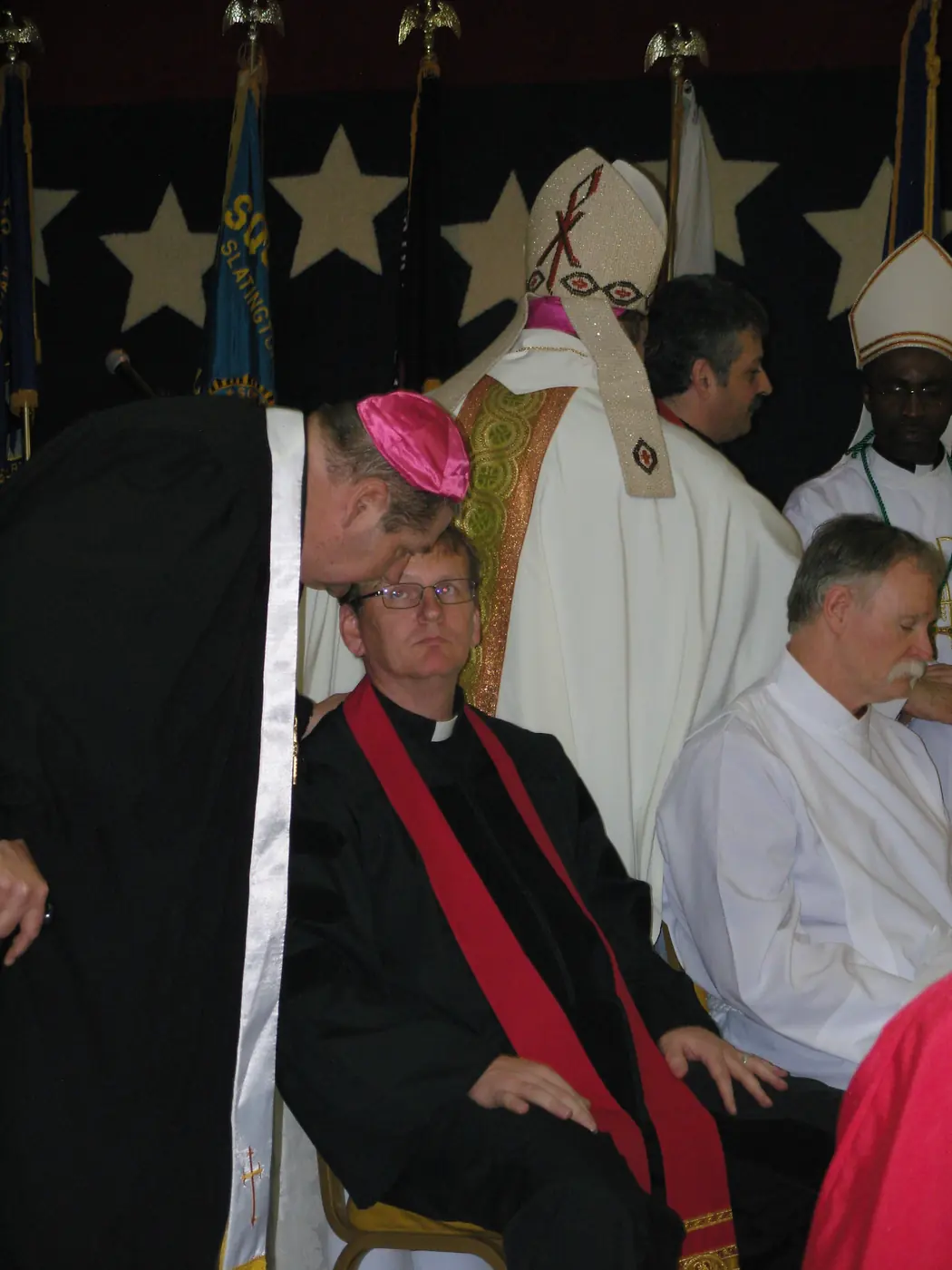
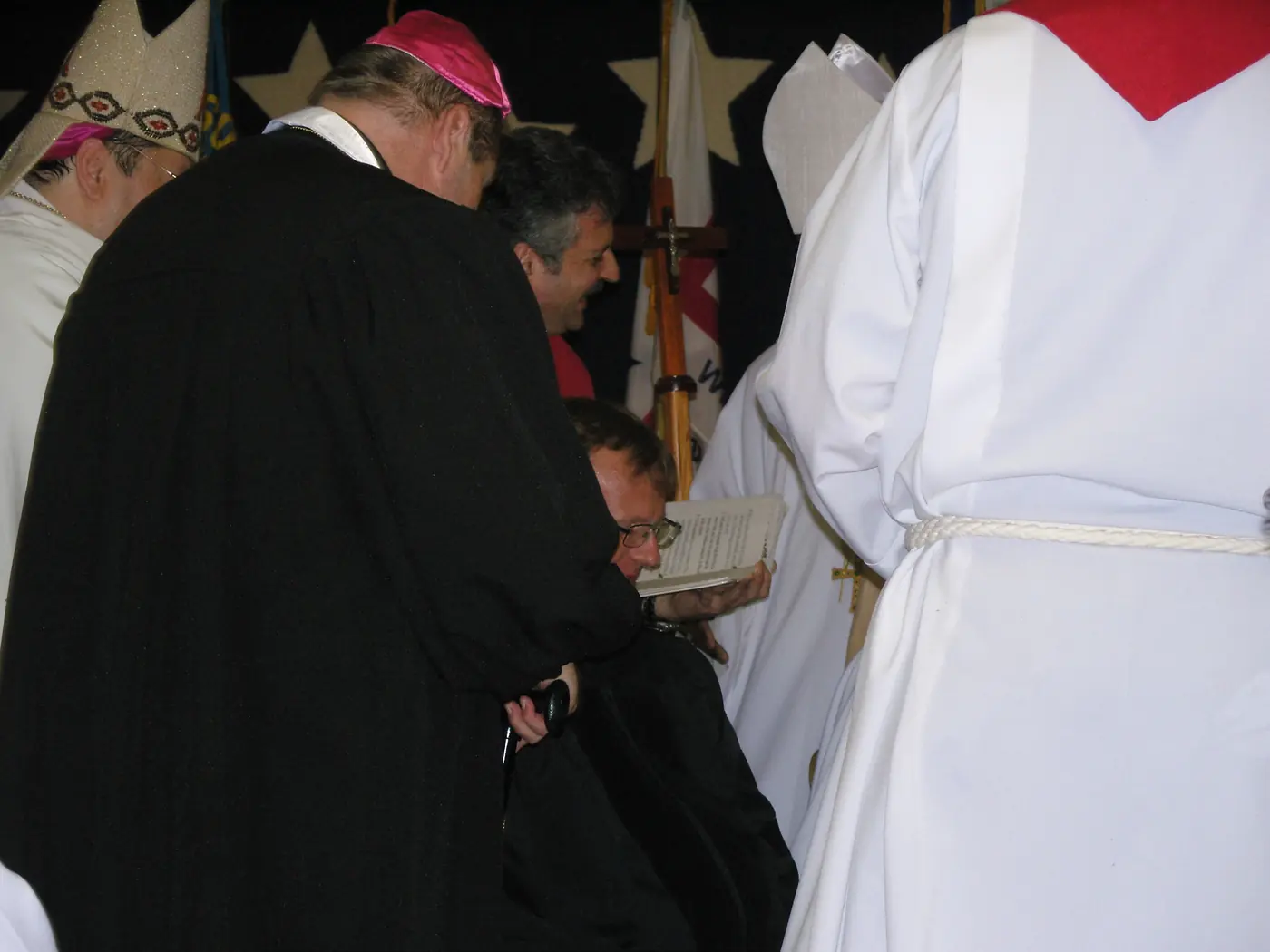
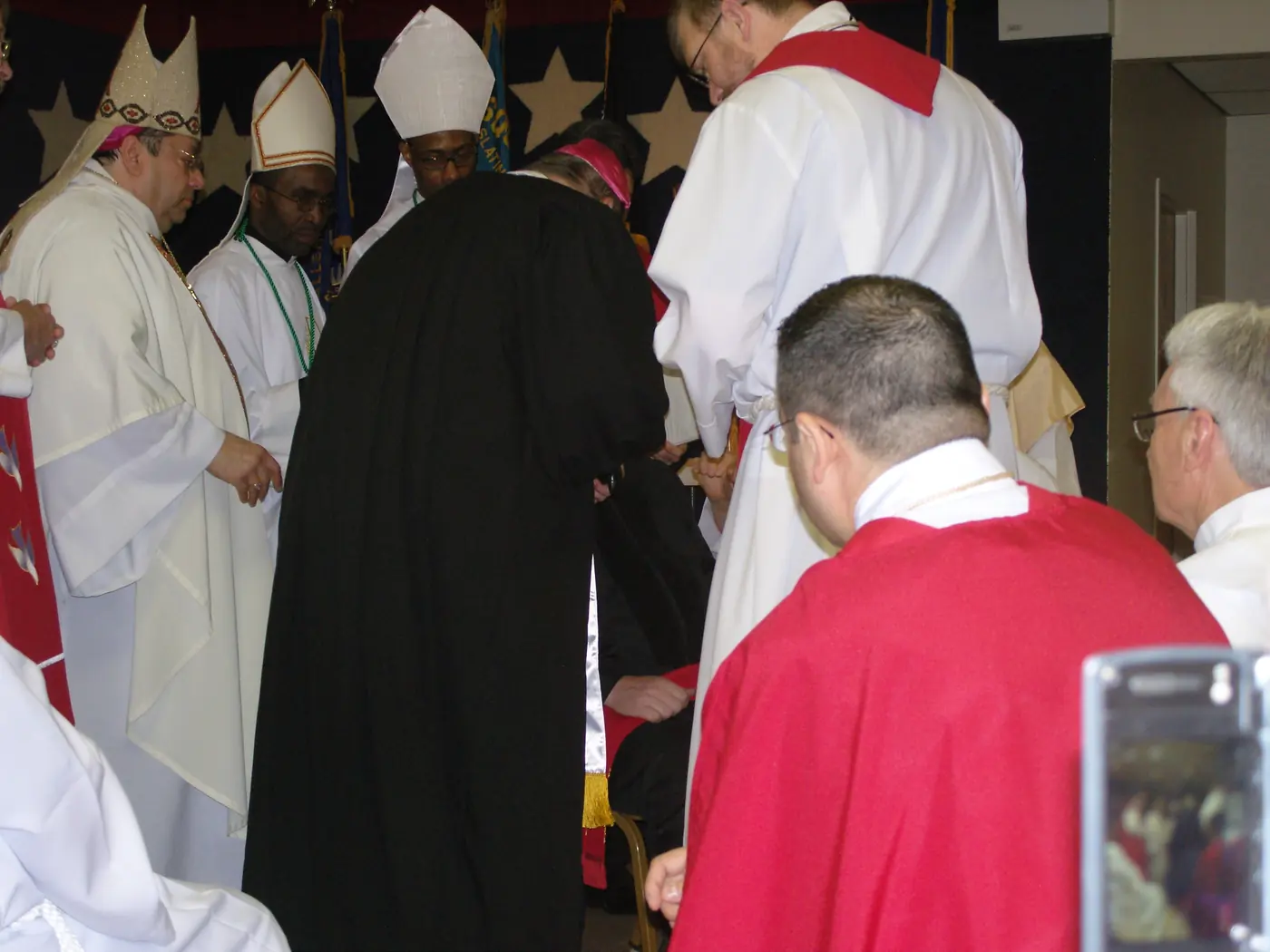
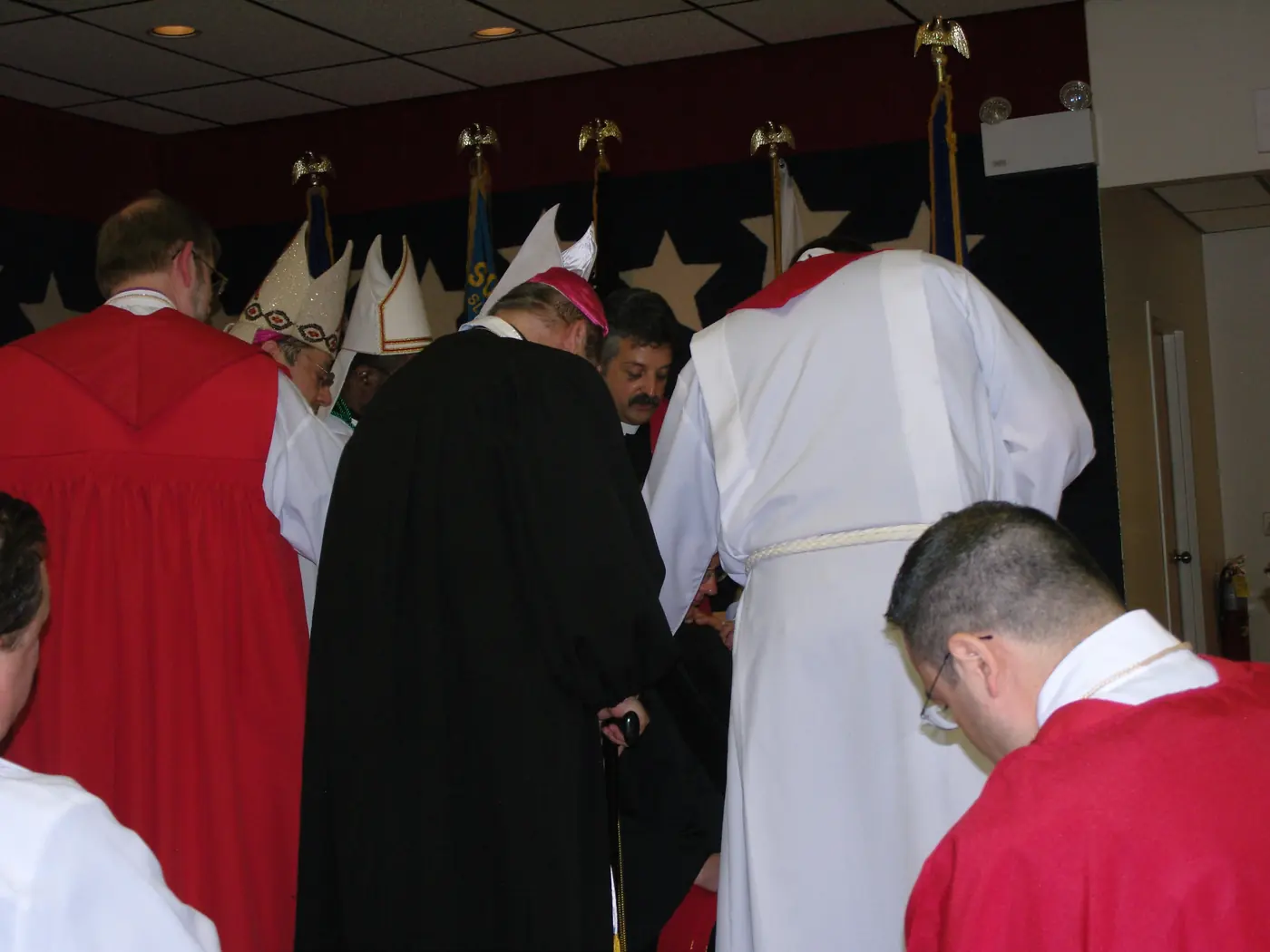
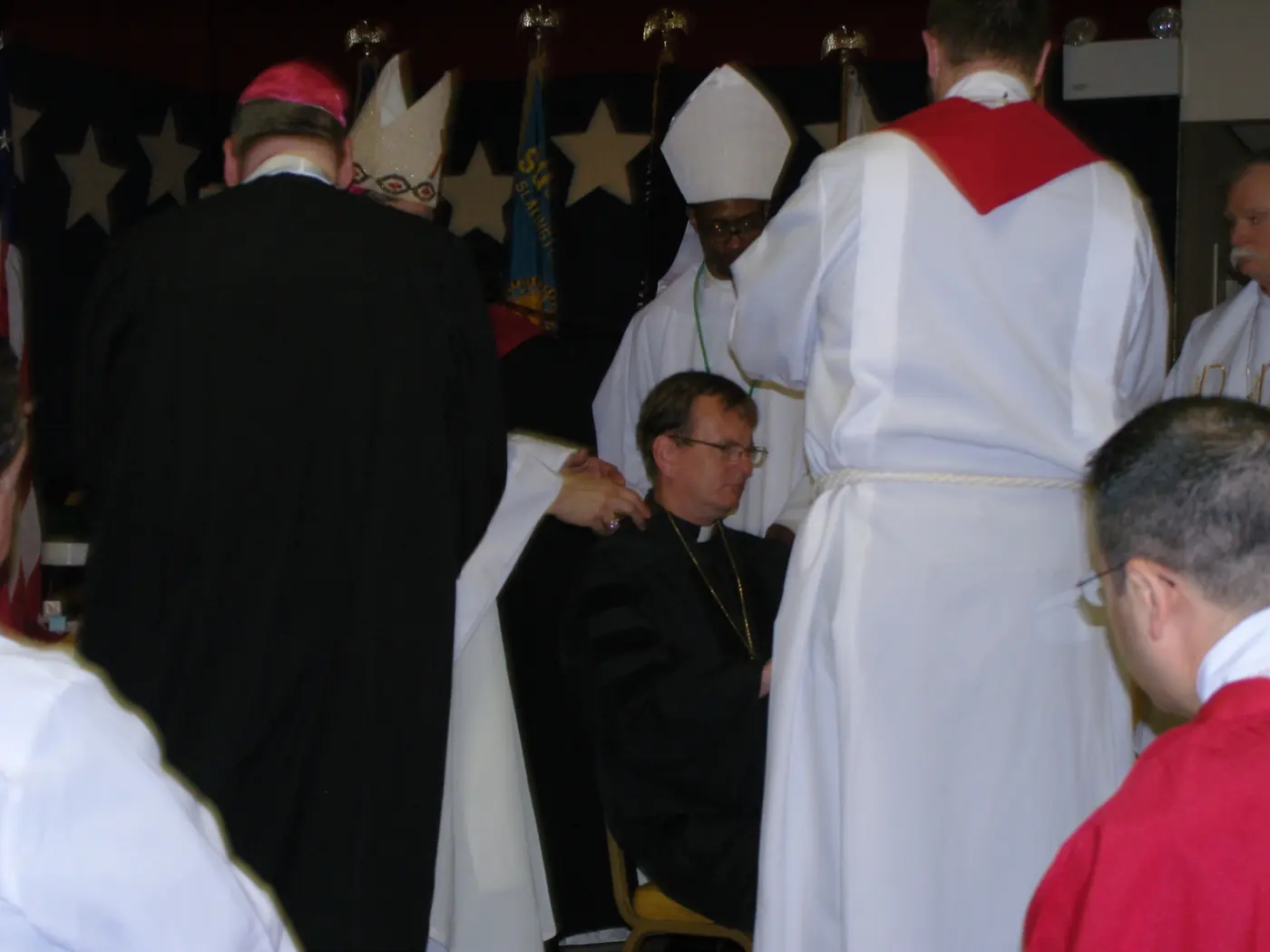
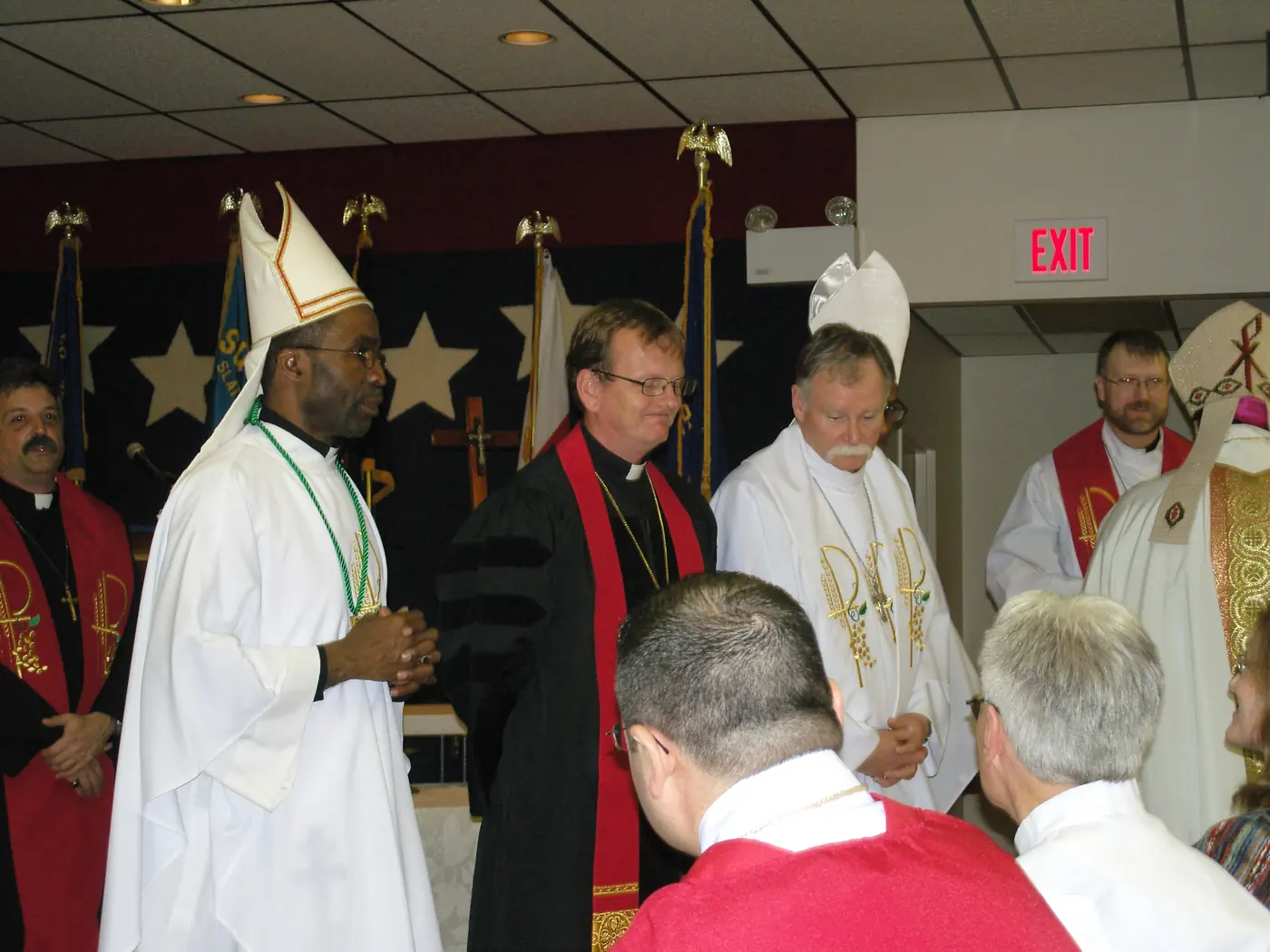
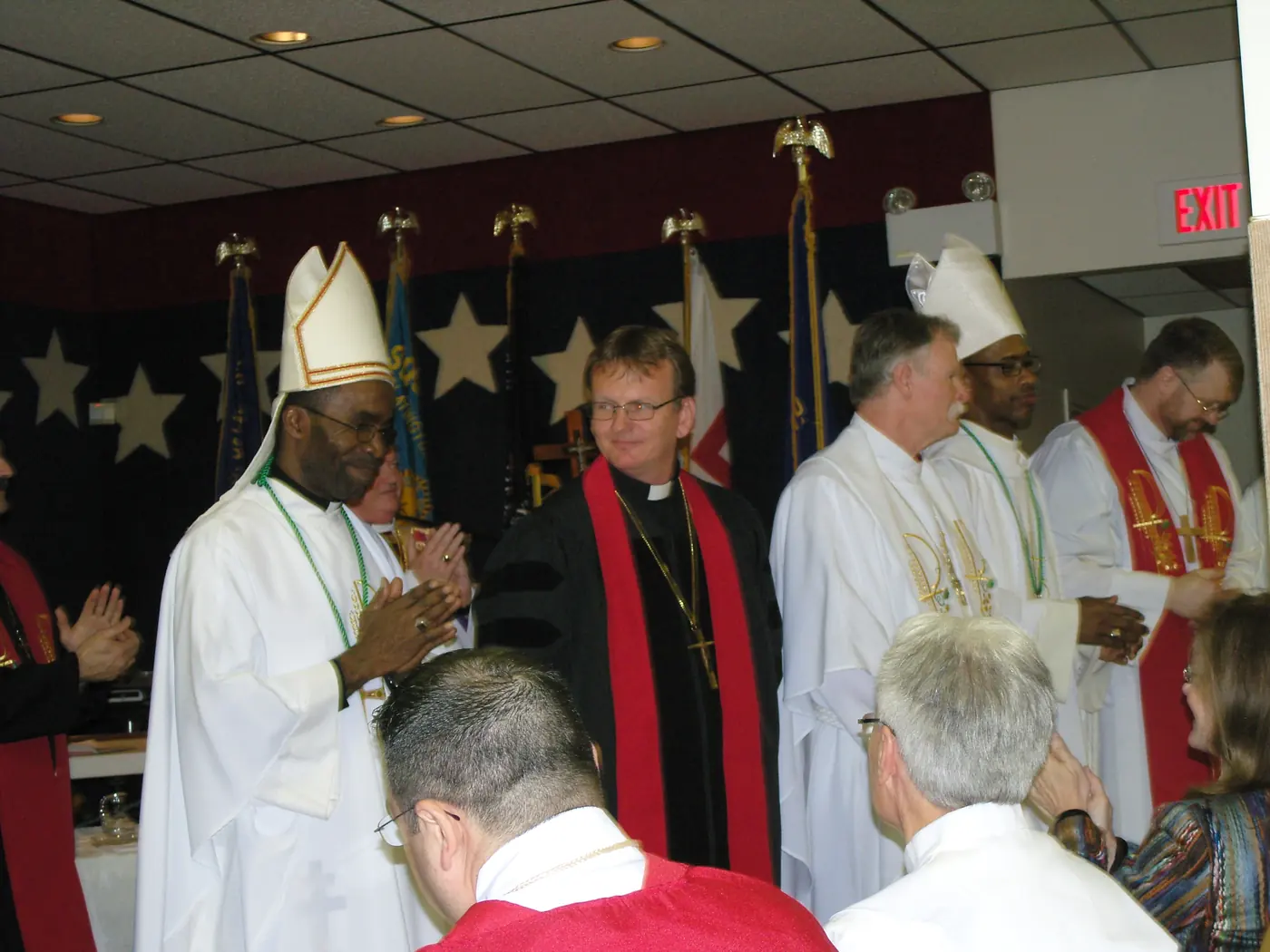
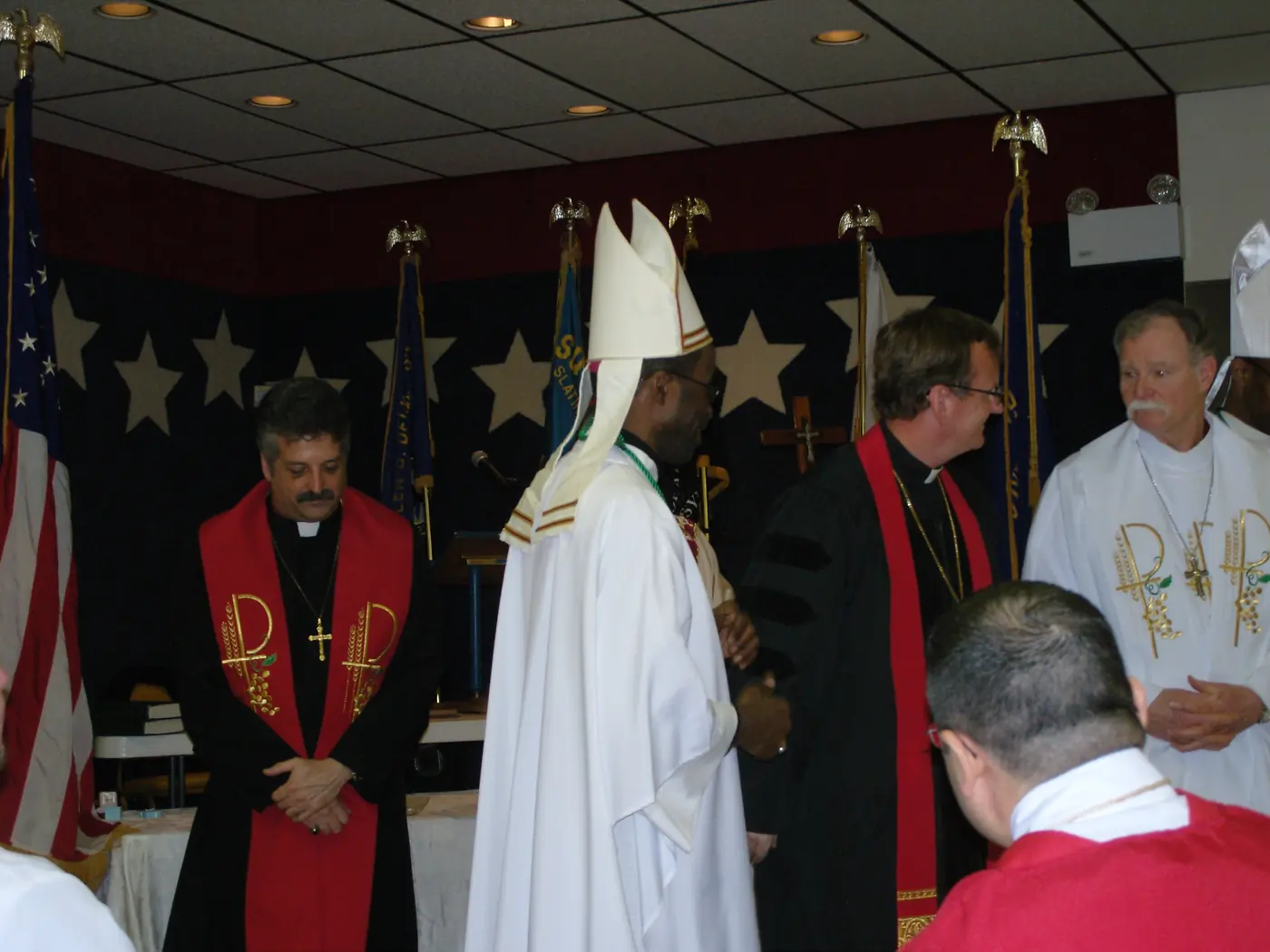
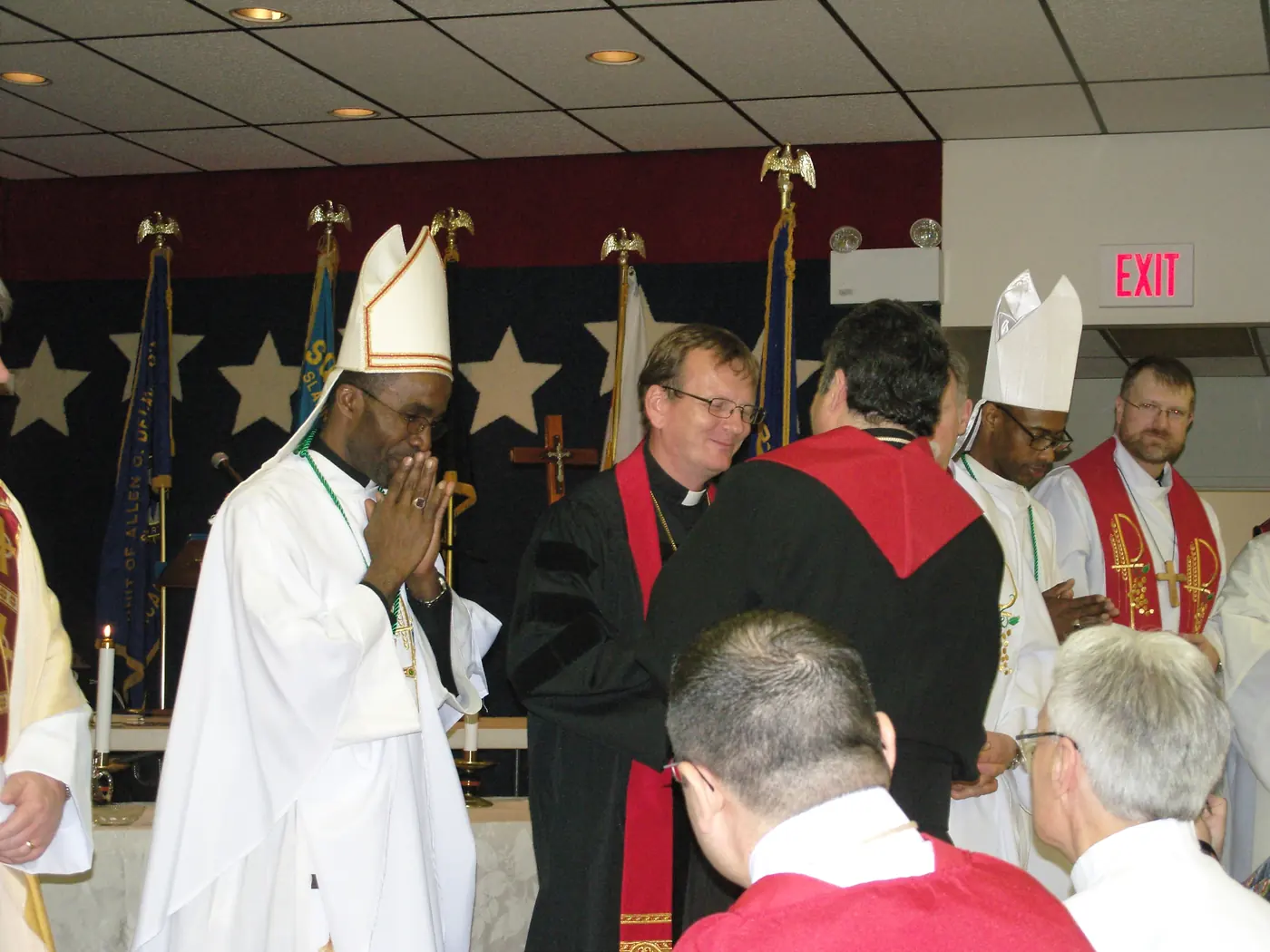
On the same day, the church conferred on him the degree of Doctor of Divinity, honoris causa, in recognition of his work on the church’s theological matters and questions, as churches are sometimes accustomed to do.
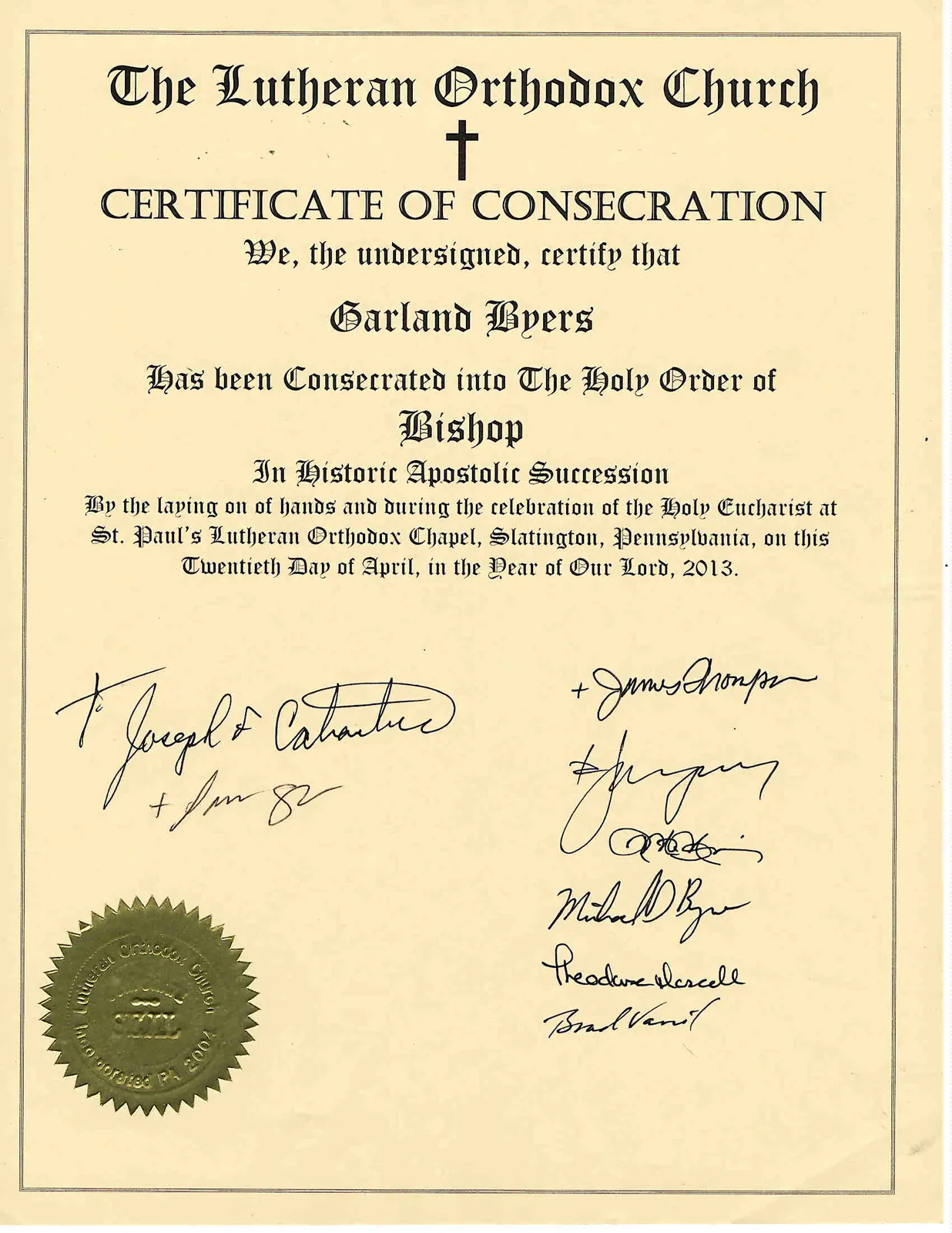
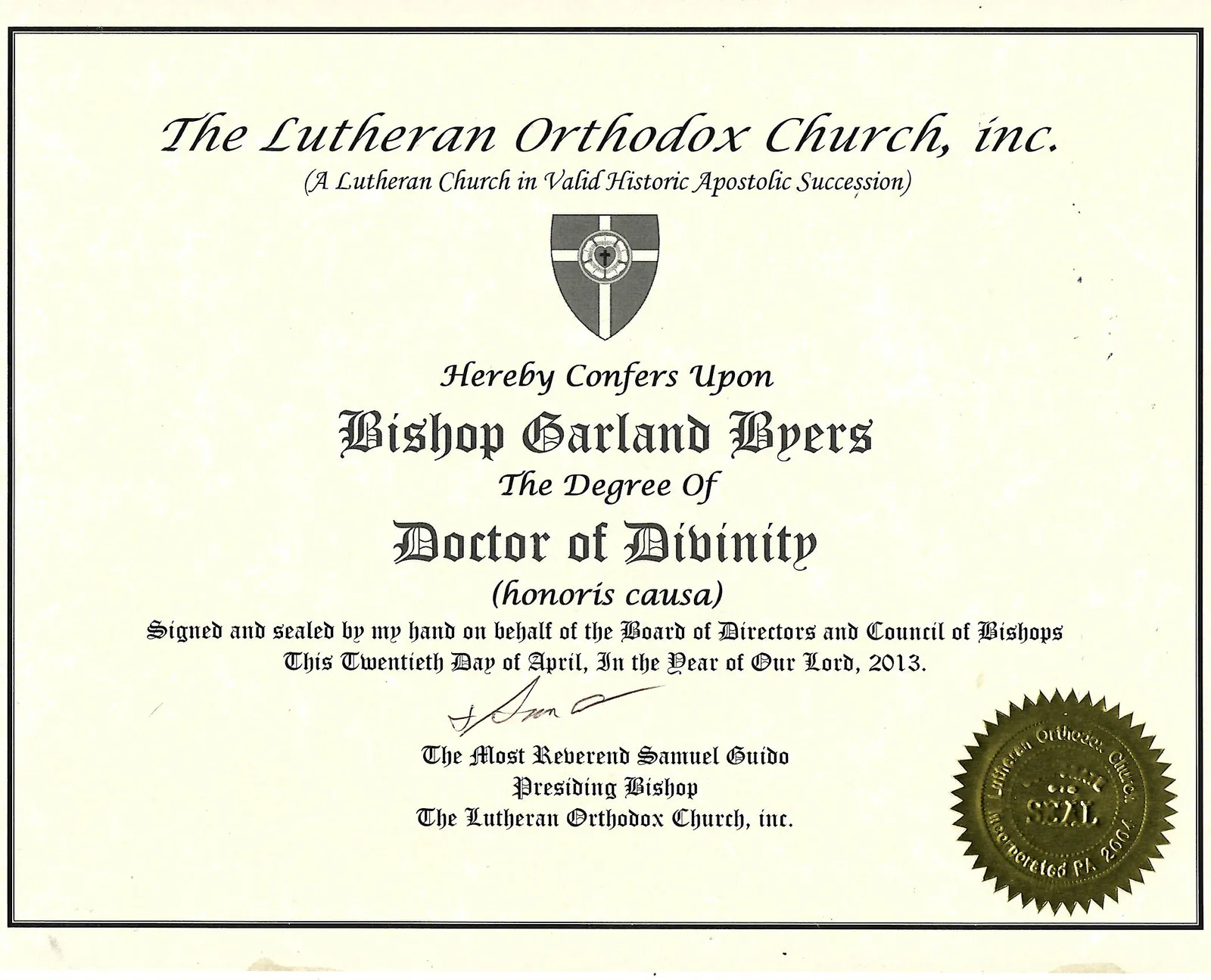
Archbishop, and Departure in Charity
Bishop Byers was later elevated to Archbishop of the Diocese of Western North Carolina. He subsequently withdrew from the Lutheran Orthodox Church. The decision was his own, made for personal reasons, and it arose from no disagreement with any member of the Council of Bishops or of the administrative body. He remains in communion with them. He loves each member of that church as a brother or sister in Christ, and he is thankful for the part they played in bringing him to Christ and under holy orders.
Bishop to the Nations, under Apostolic Commission
After his consecration, Bishop Byers was led to understand that his calling was neither to pastor a church nor to serve as a diocesan bishop, overseeing the ministers of a territory. His calling is the ministry of the Gospel through the written word, and the setting forth of true doctrine before the people of God.
He describes that work in the words of the Lord Himself:
Then said he unto them, “Therefore every scribe which is instructed unto the kingdom of heaven is like unto a man that is an householder, which bringeth forth out of his treasure things new and old.”Matthew 13:52 (KJV)
As a Kingdom Scribe, he brings forth things new and old, and weighs both by the Gospel of Jesus Christ, with the Holy Spirit as his guide. He draws freely on the witness of every Christian tradition, speaks for no denomination, and seeks the unity of Christ’s Church.
He claims no diocesan or territorial authority over any church or denomination, anywhere. He writes under the commission Christ gave to His apostles:
“Go ye therefore, and teach all nations, baptizing them in the name of the Father, and of the Son, and of the Holy Ghost: Teaching them to observe all things whatsoever I have commanded you: and, lo, I am with you alway, even unto the end of the world. Amen.”Matthew 28:19–20 (KJV)
Although he views himself as a Kingdom Scribe, Bishop Byers retains the full sacramental authority of the office of bishop, and may perform every sacramental act that belongs to that office.
The ministry of the written word, the work of the Kingdom Scribe, is set forth in full under Publications, where his writings are gathered by their kind.
Independent Records
Readers who wish to verify this record may consult the following:
- The Lutheran Orthodox Church, Clergy List, which names Garland Byers among its rostered clergy. Although Bishop Byers has for some years been unaffiliated with the Lutheran Orthodox Church, he remains in communion with it and is authorized to conduct services in its churches at its request. The Clergy List is a roster of approved clergy, not of active clergy subject to the denomination’s governance.
- The Lutheran Orthodox Church, Convocation 2013, the church’s account of its General Assembly of April 2013, at which bishops were consecrated.
- The Lutheran Orthodox Church, Apostolic Lineage, recording the consecration of Archbishop Samuel Guido, Jr. in New York City on July 11, 2004, by Archbishop Nils Bertil Persson, with Archbishops Peter Paul Brennan and Irl Gladfelter as co-consecrators.
- The Apostolic Succession of Bishop Byers, tracing his lines of succession to the Apostles.
Correspondence
Bishop Byers receives correspondence by email only.
Notes
*“The Most Reverend” is the form of address generally accepted for a bishop in the United States and throughout the Christian West. Bishop Byers uses it as a matter of custom and courtesy, not of rank or honor. He places little weight on titles and much on the character of the one who bears them, and he asks to be known by his life and teaching rather than by any style of address.
†The Lord Jesus spoke of “the Kingdom Scribe” in Matthew 13:52: “Therefore every scribe which is instructed unto the kingdom of heaven is like unto a man that is an householder, which bringeth forth out of his treasure things new and old” (KJV). A “Kingdom Scribe” is one who is instructed in the things of the Kingdom, who brings forth the old and the new and weighs them by the Gospel of Jesus Christ, with the Holy Spirit as guide. This calling is described more fully above, under “Bishop to the Nations, under Apostolic Commission.”
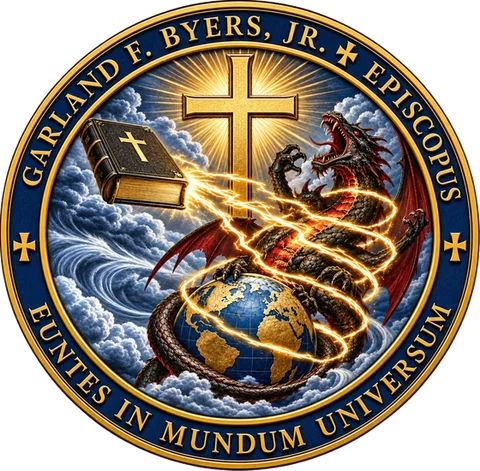
Euntes in Mundum Universum: “Go ye into all the world” (Mark 16:15, KJV). The meaning of the seal is set forth on The Episcopal Seal.