Apostolic Succession
in the line of
The Most ReverendGarland F. Byers, Jr., J.D., D.D.
Bishop to the Nations, under Apostolic Commission
What Apostolic Succession Is
Apostolic succession is the unbroken line of bishops, each consecrated by the laying on of hands by those before him, reaching back to the apostles whom Christ sent. The early Church pointed to it as a witness that its ministry came down from the apostles themselves: St. Clement of Rome wrote of it about A.D. 96, and St. Irenaeus of Lyon about A.D. 180 set out the succession of the bishops of Rome from the apostles to his own day.
Christians do not agree on its importance. Many denominations hold that apostolic succession is of no consequence, and that the Church’s faithfulness lies in keeping the apostles’ teaching rather than in any line of bishops. Others hold it to be essential to a true ministry and true sacraments, among them the Roman Catholic Church, the Eastern Orthodox Churches, the Oriental Orthodox Churches, and the Church of the East, while Anglican and some Lutheran churches treasure it. Within many denominations, too, views are mixed on how much a bishop’s descent from an apostle of Christ matters.
The Twelve and the Seventy
Some in the Christian faith draw a distinction between the original Twelve apostles and the Seventy whom the Lord “appointed” and “sent two and two before his face” (Luke 10:1). Both were commissioned by Christ himself to proclaim the kingdom of God, to heal, and to carry his authority: “He that heareth you heareth me” (Luke 10:16).
Bishop Byers is of the opinion that the Seventy knew Christ personally and were commissioned by him personally; the Lord knew them well enough to send them to do his work. For that reason he holds that apostolic succession includes the Seventy as well as the original Twelve. St. Paul, called after the Resurrection as the Apostle to the Gentiles, was received by the Twelve as a true apostle, who gave him “the right hands of fellowship” (Galatians 2:9).
The Lineages on These Pages
Bishop Byers lists his apostolic lineages here for public inspection and for the benefit of the Christian faithful. Each page traces one line from its apostle, bishop by bishop, to Bishop Byers. In most instances, each line follows, back to the apostle, the very lists of bishops kept by the churches named on its page, the same lists by which those churches trace their own apostolic succession, and the saints named in each line are those whom those churches honor.
The certificates of Bishop Byers’s own ordination and consecration, with photographs of his consecration, are presented on the About the Bishop page.
Whatever view one takes of the Seventy, Bishop Byers holds valid apostolic succession from four of the original Twelve, St. Peter, St. Andrew, St. John, and St. Thomas, and also from St. Paul, the Apostle to the Gentiles. It may be noted in passing that, as of 2026, by his principal line of consecration, the present Bishop of Rome traces his apostolic succession to St. Peter alone; and the present Patriarch of Moscow and All Russia, by his principal line of consecration, traces his apostolic succession likewise to St. Peter alone, through the see of Antioch. The present Archbishop of Canterbury, by her principal line of consecration, traces her apostolic succession to a single apostle, through the see of Canterbury; the present Syriac Orthodox Patriarch of Antioch, by his principal line of consecration, to St. Peter alone, through the see of Antioch; and the present Catholicos-Patriarch of the Assyrian Church of the East, by the list of that Church, to St. Thomas, through the see of Seleucia-Ctesiphon.
As to the Seventy, Bishop Byers holds apostolic succession from five whom the Churches honor as Apostles of the Seventy: St. Thaddeus (Addai), apostle of Edessa; St. Linus, first bishop of Rome after St. Peter; St. Evodius, first bishop of Antioch after St. Peter; St. Stachys, first bishop of Byzantium; and St. Trophimus, first bishop of Arles.
Sources and Verification
These lines were received in the book of apostolic lineages presented to Bishop Byers at his consecration in 2013. They have not simply been copied. Each link has been examined and verified through Bishop Byers’s own research, against the lists of bishops kept by the churches named on each page and the standard historical records of episcopal succession, among them the Holy See’s records of the Roman succession, the lists of the Ecumenical Patriarchate of Constantinople and the Patriarchates of Antioch, the records of the Russian Orthodox, Old Catholic, Syriac Orthodox, and Assyrian Churches, and William Stubbs’s Registrum Sacrum Anglicanum, the register of the consecrations of the English bishops.
Where those records differ from the book, the records have been followed and the lines corrected. Lines claimed in the book that could not be verified from the records have been omitted. Every bishop named on these pages may be checked by the reader in the records of his own Church.
Apostolic Lines at a Glance
Bishop Byers holds apostolic succession from ten apostles, four of the original Twelve, St. Paul, and five of the Seventy, by eleven separate routes, each set out on its own page below. The numbers show his place in each line.
| Apostle | Routes | Bishop Byers |
|---|---|---|
| St. Peter | Rome (Rebiba–Brazil) · Rome (Utrecht) · Antioch (Melkite) · Antioch (Orthodox) · Antioch (Syriac Orthodox) | 245 · 252 · 169 · 165 · 146 |
| St. Andrew | Kiev–Moscow · Constantinople–Albania | 173 · 264 |
| St. John | Canterbury · Scotland–Seabury | 126 · 132 |
| St. Thomas | Church of the East | 112 |
| St. Paul | Canterbury · Scotland–Seabury | 128 · 134 |
| Apostle of the Seventy | Routes | Bishop Byers |
|---|---|---|
| St. Thaddeus (Addai) | Church of the East | 111 |
| St. Linus | Rebiba–Brazil · Utrecht | 244 · 251 |
| St. Evodius | Melkite · Orthodox · Syriac Orthodox | 168 · 164 · 145 |
| St. Stachys | Kiev–Moscow · Constantinople–Albania | 172 · 263 |
| St. Trophimus | Canterbury · Scotland–Seabury | 127 · 133 |
By the same measure, the principal line of consecration, the heads of the ancient Churches each hold a single line to a single apostle. Bishop Byers shares a line with each, as the panel on each apostle’s page records.
| Head of Church | Lines | Apostle | Shared line with Bishop Byers |
|---|---|---|---|
| The Bishop of Rome, Pope Leo XIVRoman Catholic Church | 1 | St. Peter | Rome (two routes) |
| The Patriarch of Moscow and All Russia, Patriarch KirillRussian Orthodox Church | 1 | St. Peter (through Antioch) | Antioch, through Moscow |
| The Archbishop of Canterbury, Sarah MullallyChurch of England and the Anglican Communion | 1 | One apostle, through Canterbury | Canterbury (two routes) |
| The Syriac Orthodox Patriarch of Antioch, Ignatius Aphrem IISyriac Orthodox Church | 1 | St. Peter (through Antioch) | Antioch (Syriac Orthodox) |
| The Catholicos-Patriarch of the East, Mar Awa IIIAssyrian Church of the East | 1 | St. Thomas | Church of the East |
| Bishop Byers | 11 | Ten apostles | — |
The number of lines adds nothing to the grace of holy orders, since a single valid line suffices; they are set out here as a record, for those who wish to examine them. Apostolic succession is not a competition, and a bishop holding many lines has no greater authority or legitimacy than one who holds a single line that is sound and verifiable. Nothing on these pages should be taken as a claim of precedence over any bishop, least of all over those named here, who have given their whole lives to the service of the Church. The lines are documented so that the Christian faithful, and anyone who wishes to examine Bishop Byers’s orders, may find the facts in one place, and so that attention may rest where it belongs, on the Word of God and the Gospel of Jesus Christ.
Saints and Martyrs
On each apostle’s page, those in the line who gave their lives for the faith are identified as martyrs, and those who have been canonized or otherwise raised to the honors of the altar are marked with their standing as saints or blessed, whether in the Eastern Orthodox tradition, the Western tradition, or both. The Churches differ in which saints they recognize and in what they require before a person is honored as a saint; the marks on each page show which Church honors whom. They concern holiness of life only, and have no bearing on the validity of any consecration.
Select an apostle to view the line of succession.
The Apostles
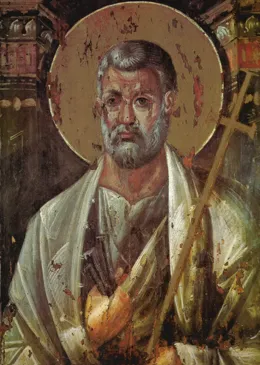 Saint Peter at Rome (Rebiba–Brazil)Apostle and MartyrRome, the Rebiba succession, Brazil, and AmericaBishop Byers, No. 245 in succession
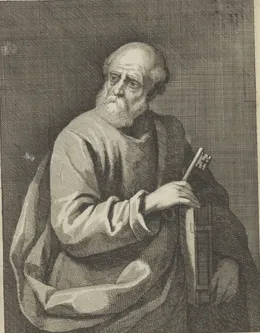 Saint Peter at Rome (Utrecht)Apostle and MartyrRome, France, Utrecht, England, and AmericaBishop Byers, No. 252 in succession
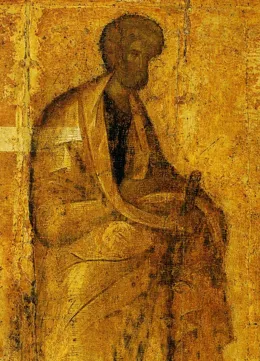 Saint Peter at Antioch (Melkite)Apostle and MartyrAntioch, the Melkite Patriarchate, Beirut, and AmericaBishop Byers, No. 169 in succession
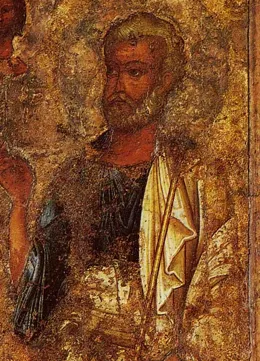 Saint Peter at Antioch (Orthodox)Apostle and MartyrAntioch, the Orthodox Patriarchate, Moscow, and AmericaBishop Byers, No. 165 in succession
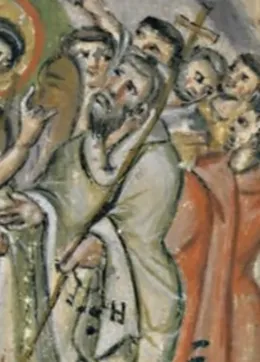 Saint Peter at Antioch (Syriac Orthodox)Apostle and MartyrAntioch, the Syriac Orthodox Patriarchate, India, and AmericaBishop Byers, No. 146 in succession
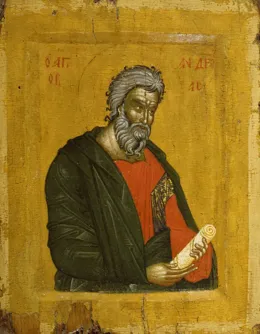 Saint Andrew (Kiev–Moscow)the First-Called, Apostle and MartyrConstantinople, Kiev, Moscow, and AmericaBishop Byers, No. 173 in succession
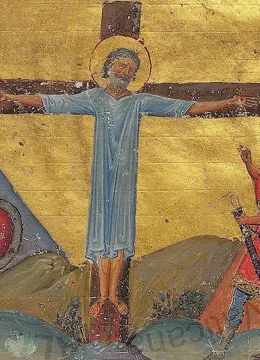 Saint Andrew (Constantinople–Albania)the First-Called, Apostle and MartyrConstantinople, Albania, and AmericaBishop Byers, No. 264 in succession
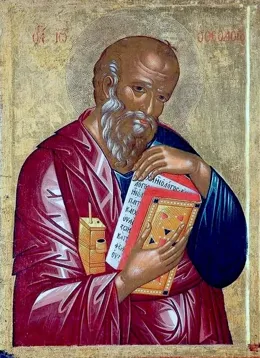 Saint John (Canterbury)Apostle and EvangelistSmyrna, Lyon, Canterbury, and AmericaBishop Byers, No. 126 in succession
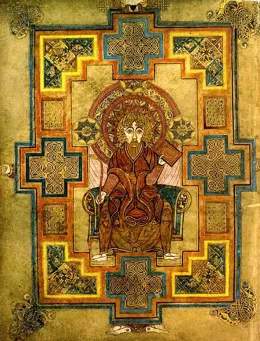 Saint John (Scotland–Seabury)Apostle and EvangelistSmyrna, Lyon, Canterbury, Scotland, and AmericaBishop Byers, No. 132 in succession
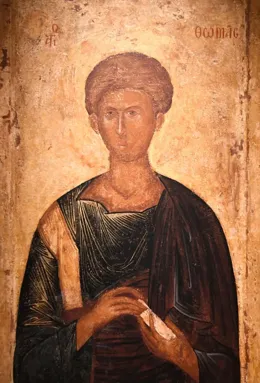 Saint ThomasApostle and MartyrThe Church of the East, India, England, and AmericaBishop Byers, No. 112 in succession
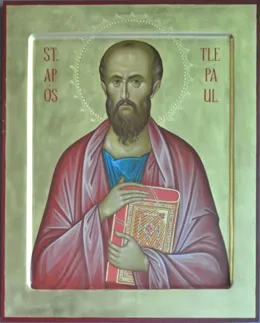 Saint Paul (Canterbury)Apostle to the Gentiles and MartyrArles, Canterbury, the Church of England, and AmericaBishop Byers, No. 128 in succession
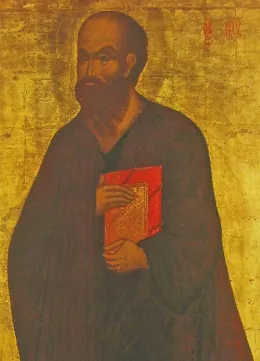 Saint Paul (Scotland–Seabury)Apostle to the Gentiles and MartyrArles, Canterbury, Scotland, and AmericaBishop Byers, No. 134 in succession
Of the Seventy
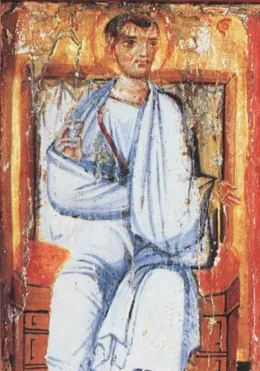 Saint Thaddeus (Addai)Apostle of the SeventyThe Church of the East, India, England, and AmericaBishop Byers, No. 111 in succession
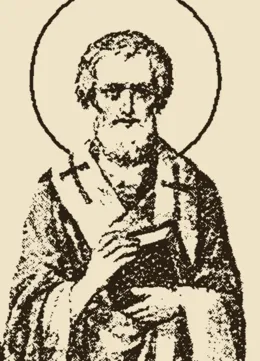 Saint Linus (Rebiba–Brazil)Apostle of the SeventyRome, the Rebiba succession, Brazil, and AmericaBishop Byers, No. 244 in succession
 Saint Linus (Utrecht)Apostle of the SeventyRome, France, Utrecht, England, and AmericaBishop Byers, No. 251 in succession
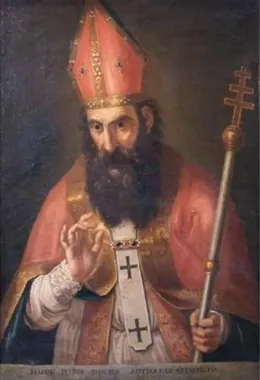 Saint Evodius (Melkite)Apostle of the SeventyAntioch, the Melkite Patriarchate, Beirut, and AmericaBishop Byers, No. 168 in succession
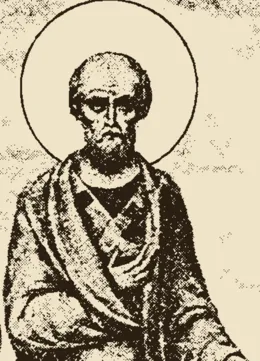 Saint Evodius (Orthodox)Apostle of the SeventyAntioch, the Orthodox Patriarchate, Moscow, and AmericaBishop Byers, No. 164 in succession
- Saint Evodius (Syriac Orthodox)Apostle of the SeventyAntioch, the Syriac Orthodox Patriarchate, India, and AmericaBishop Byers, No. 145 in succession
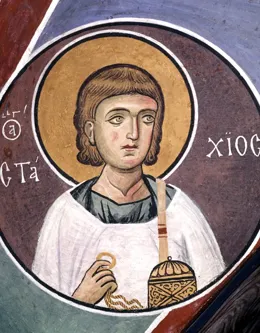 Saint Stachys (Kiev–Moscow)Apostle of the SeventyConstantinople, Kiev, Moscow, and AmericaBishop Byers, No. 172 in succession
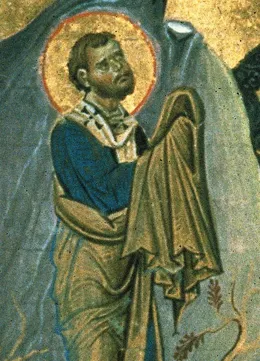 Saint Stachys (Constantinople–Albania)Apostle of the SeventyConstantinople, Albania, and AmericaBishop Byers, No. 263 in succession
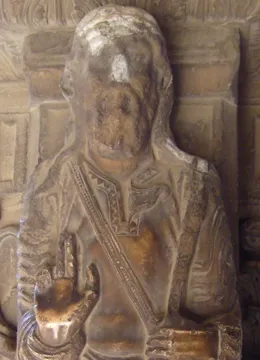 Saint Trophimus (Canterbury)Apostle of the SeventyArles, Canterbury, the Church of England, and AmericaBishop Byers, No. 127 in succession
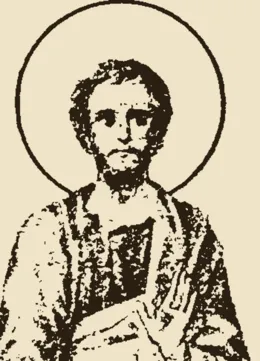 Saint Trophimus (Scotland–Seabury)Apostle of the SeventyArles, Canterbury, Scotland, and AmericaBishop Byers, No. 133 in succession